

 Image 1 of 1
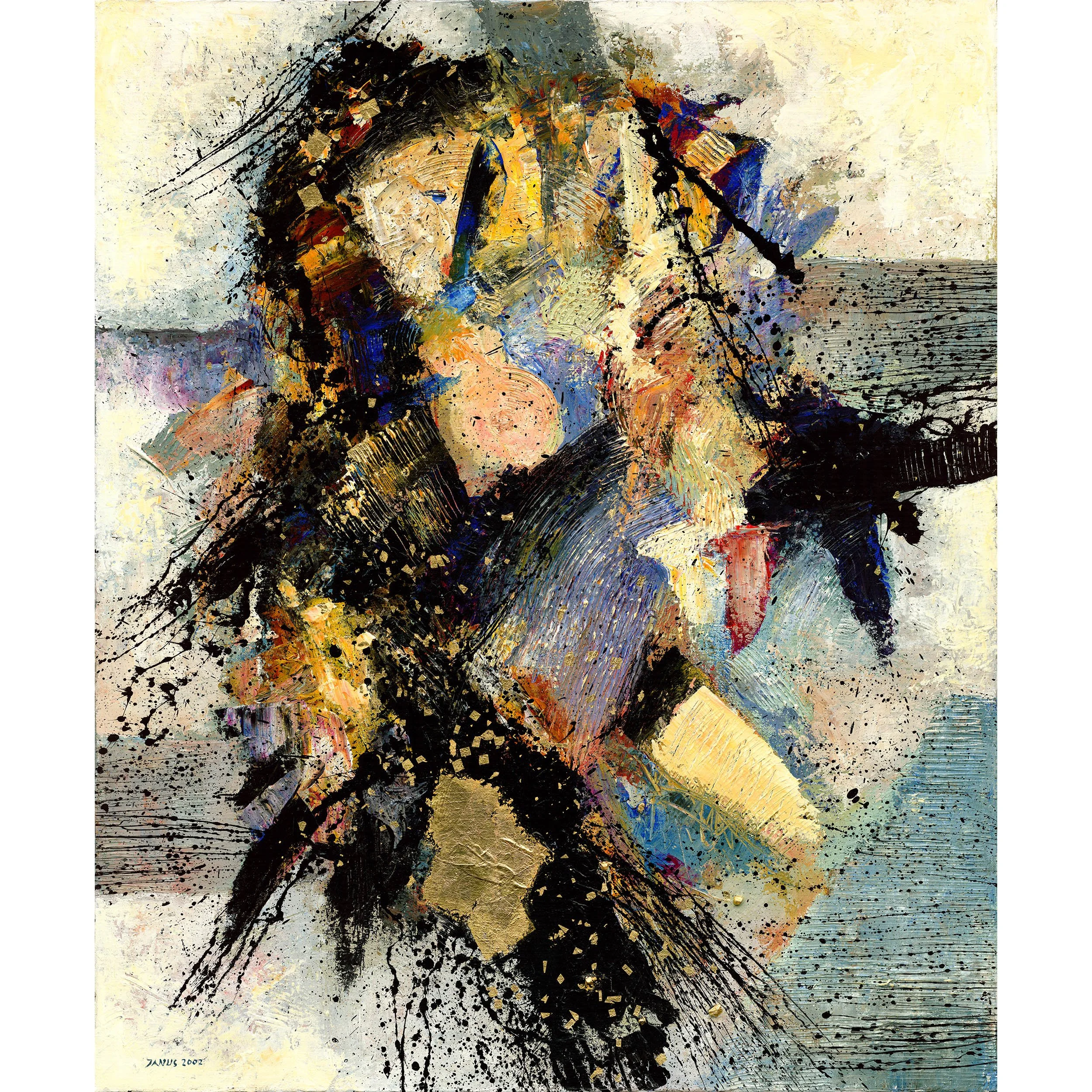
“La Traviata of G. Verdi 2002” by Janus
Janus' La Traviata is sound transformed into substance – an abstract portrait of Verdi’s opera, not painted in scenes but heard and felt through pigment. The painting doesn’t tell the story of Violetta – it renders the sound of her voice – its trembling, its radiance, its sorrow.
Golden flecks flash like candlelight in a Parisian salon, black streaks echo the piano’s shadow, and soft blues represent the breaths between notes. The entire canvas reads like a score of emotion: a tragic love collapsing before it can fully bloom. The space of the painting pulses with orchestral rhythm – there is no silence here, only varied hues of feeling.
This is lyrical painting, one that doesn’t depict – but sings. La Traviata, in Janus’ hands, becomes not only music, but an emotion transcending genre and form.