

Title: La Traviata
Artist: Janus
Technique: Mixed technique with ducats double gold 23 carat, glowing in the night
Size: 120x100 cm
Date: 2026
“La Traviata von Giuseppe Verdi” von Janus
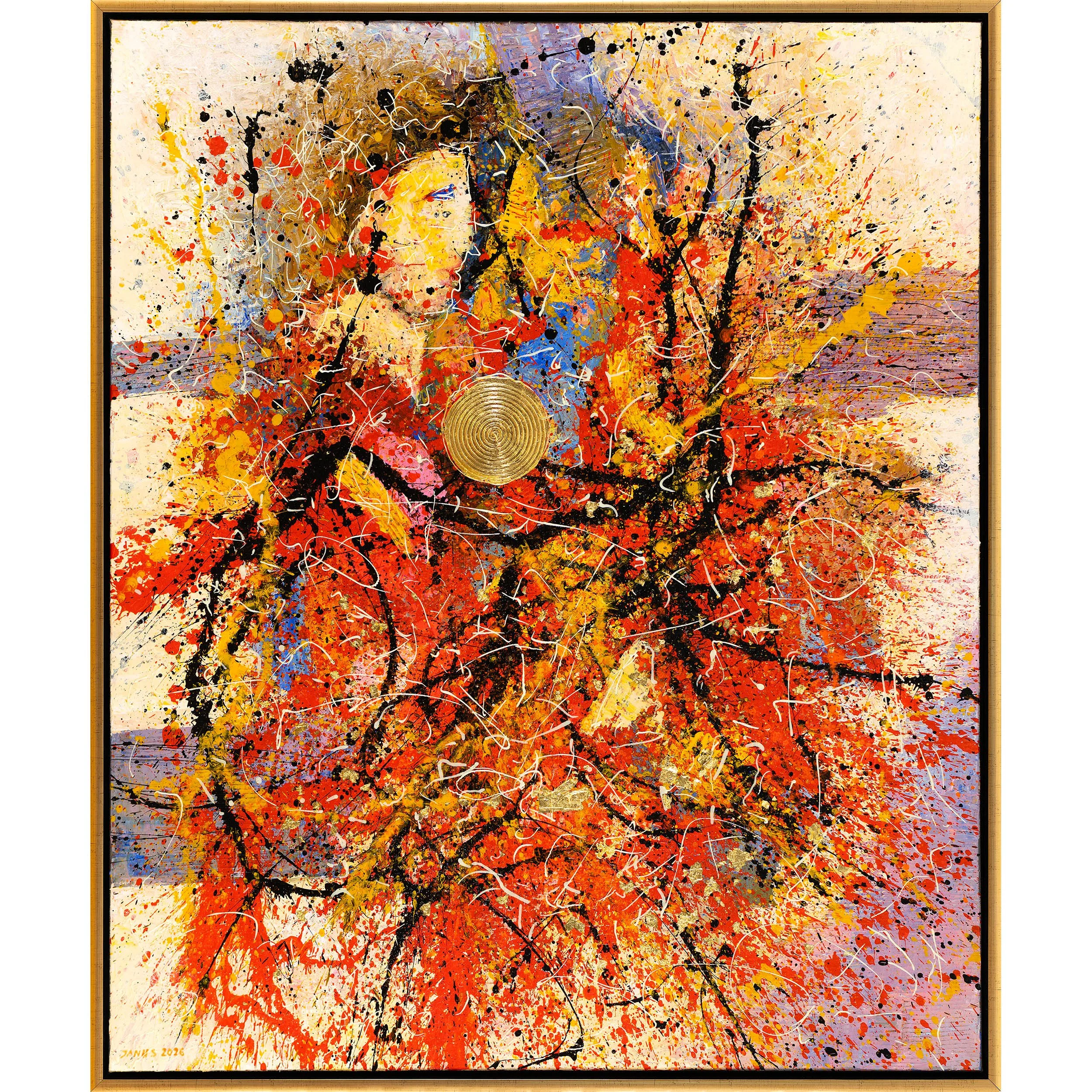
This work is far more than abstraction. It is an emotional score composed through light, movement, and raw texture. Janus transforms Verdi’s La Traviata into a visual experience, deeply infused with the dramatic intensity of Elīna Garanča’s interpretation. Passion and tragedy coexist here inseparably, just as they do in the opera itself: love blooms while already carrying the shadow of its inevitable loss.
In natural light, the painting reveals its physical and emotional force. Explosions of red, gold, black, and white create a sense of emotional combustion — desire, devotion, ecstasy, jealousy, and suffering colliding at once. The spiral form at the center acts almost like the heart of the composition: hypnotic, restless, drawing the viewer inward like the emotional vortex of the opera. The nervous, gestural lines resemble traces of breath and voice, as if the canvas itself were vibrating with the resonance of an aria.
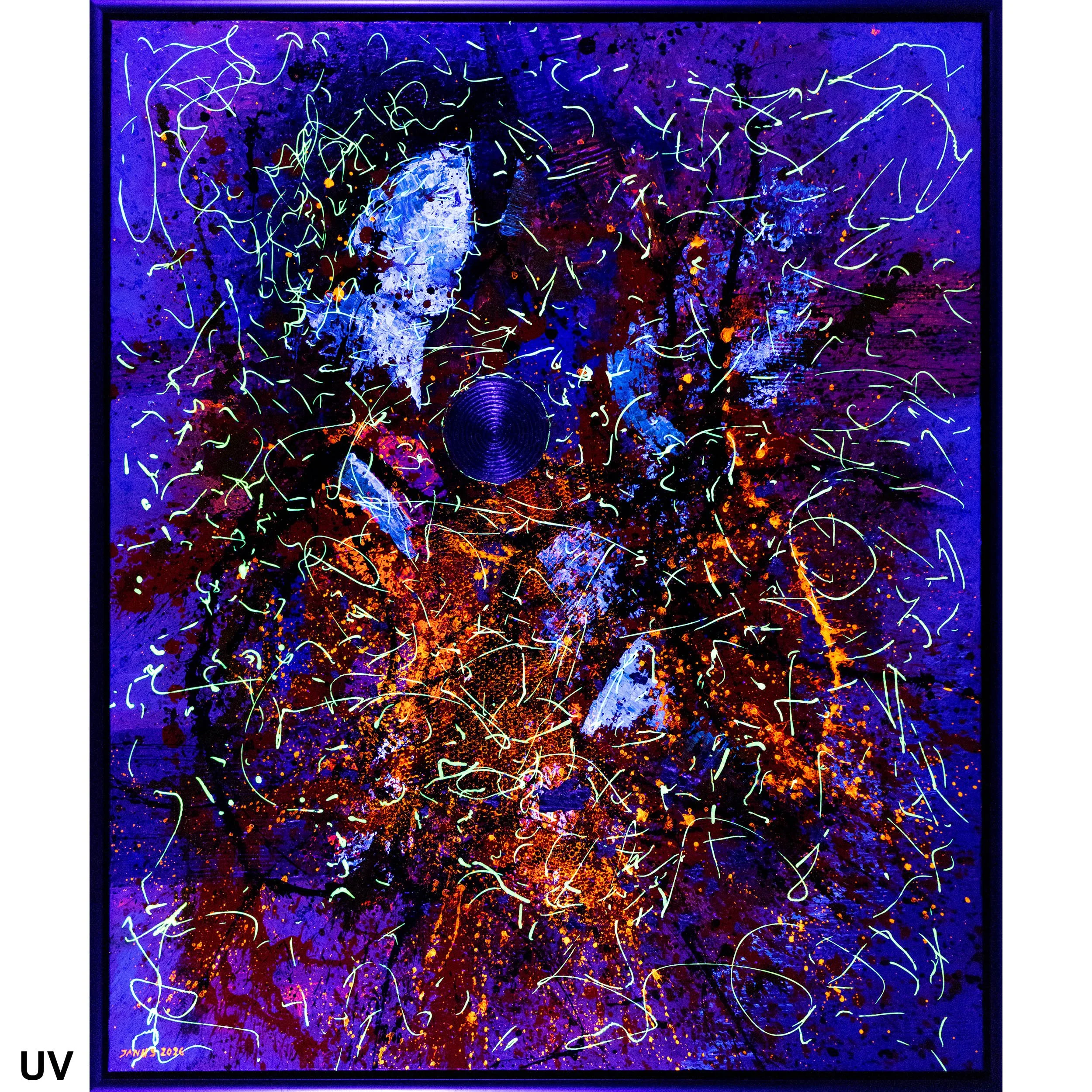
Under UV light, the work undergoes a profound transformation. Hidden fluorescent elements emerge like invisible emotions suddenly exposed. What appeared chaotic in daylight becomes charged with psychological depth. The painting begins to resemble an energetic map of memory, longing, and emotional fracture. Much like Verdi’s music, beneath beauty lies pain; beneath elegance lies despair. The ultraviolet dimension reveals the invisible drama — the fear of loss, loneliness, and the silent inevitability of heartbreak.
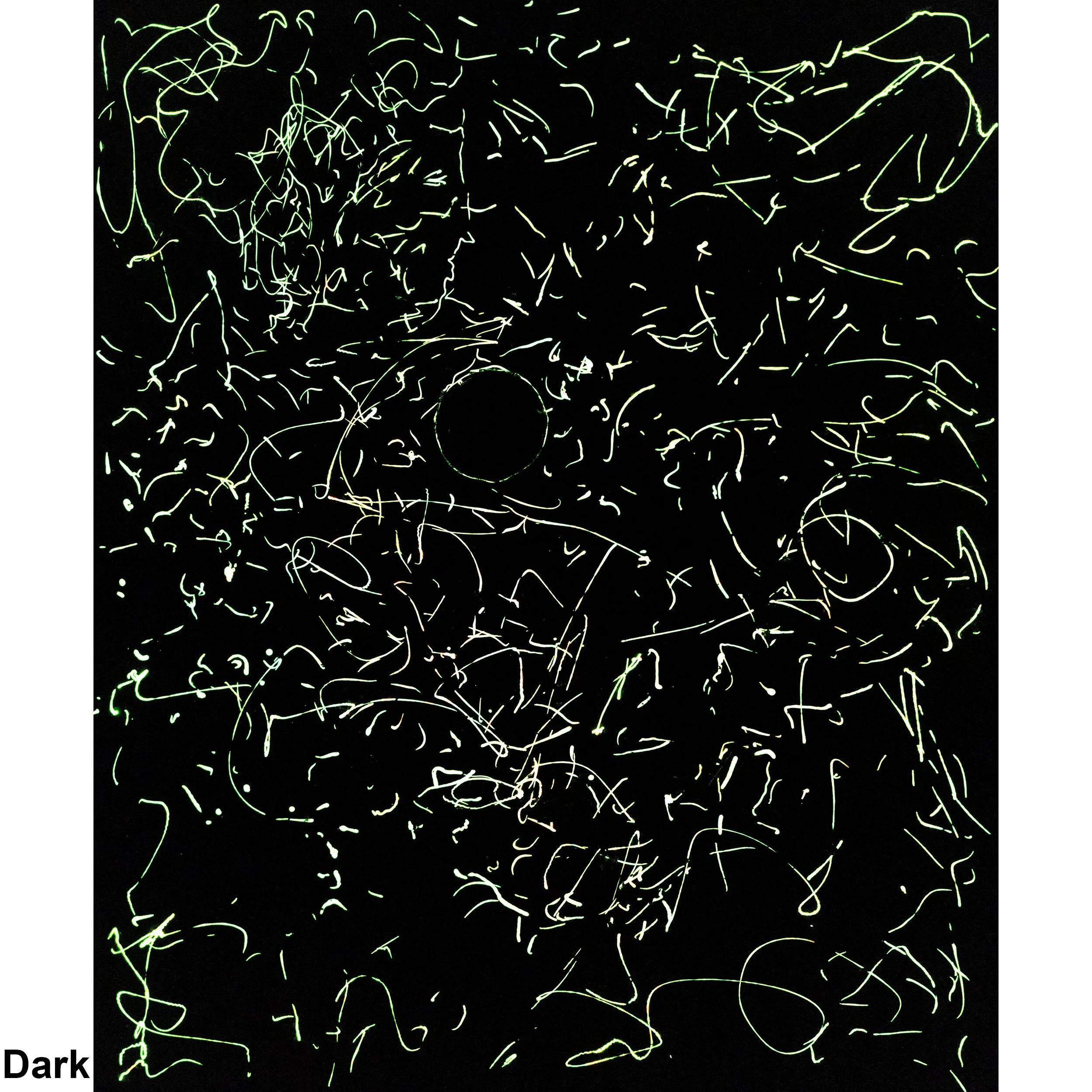
In complete darkness, however, the painting reaches its most haunting state. It emits its own delicate luminosity — not theatrical, but spectral and intimate. The glowing forms feel like the afterimage of music lingering long after the final note has faded. Here the work becomes almost metaphysical: love surviving beyond the visible world, beyond the body, beyond death itself. It evokes the emotional residue left by Violetta’s fate — fragile, tragic, yet eternal.
Janus has created a multilayered visual opera: a painting that changes with light the way human emotion changes with memory, desire, and loss. It is a work about absolute love — beautiful, destructive, and immortal.