

Artist: Janus
Title: Leda with Swan 2026
Technique: Mixed technique with ducats double gold 23 carat, glowing in the night
Size: 100 × 102 cm
Date: 2026
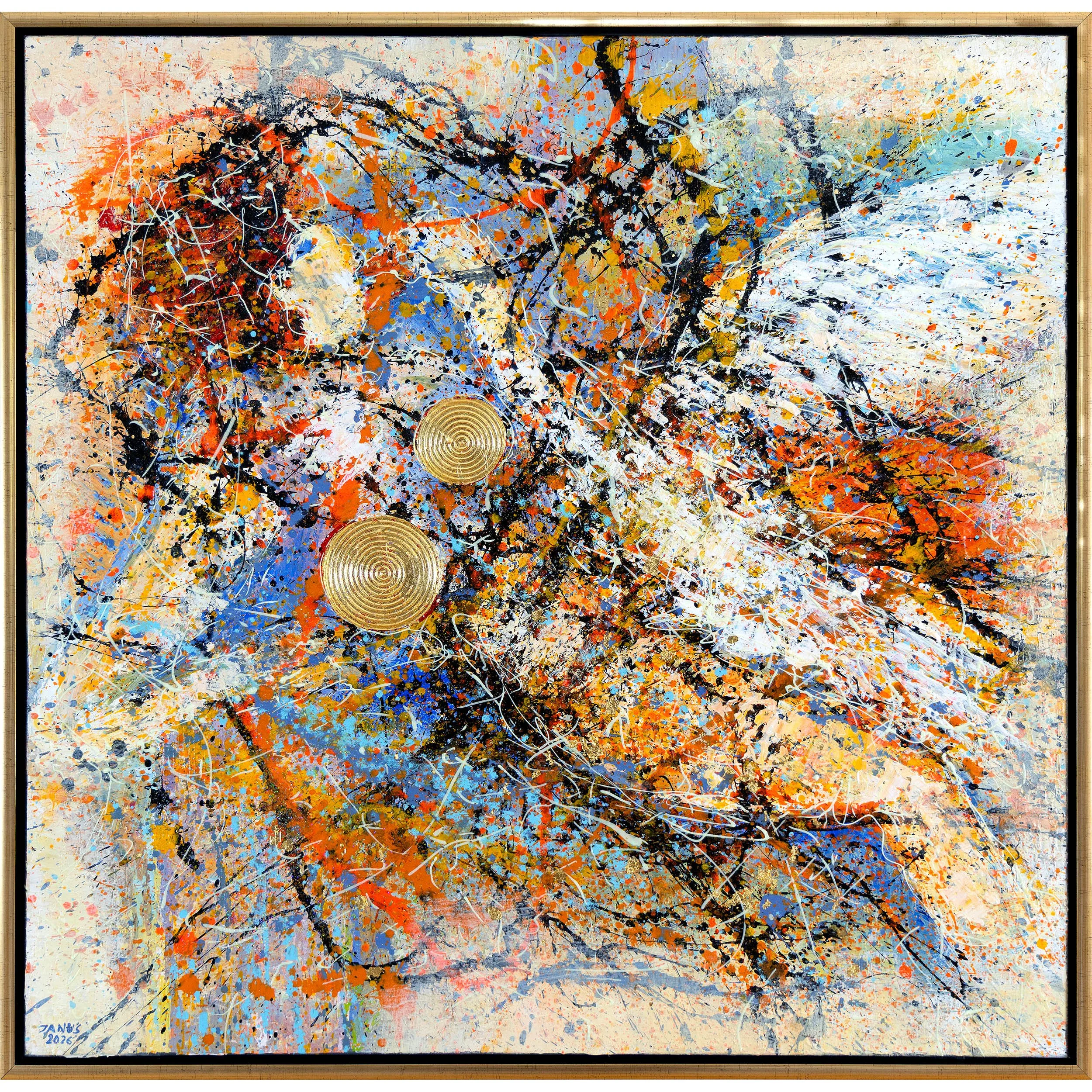
Janus’ “Leda with Swan 2026” unfolds as a record of an intense, almost elusive experience where myth meets corporeality. The composition does not narrate directly; instead, it disperses the story into fragments of gestures, impulses, and tensions. Splashes of color, abrupt lines, and layered textures create a field in which the viewer is not merely observing but is drawn into the core of the event.
The central spiral forms—read as Leda’s breasts—become the focal point of this energy. Their rhythm is soft, almost hypnotic, yet charged, as if pulsing between attraction and uncertainty. They are not a literal depiction of the body, but rather its resonance: a sign of feminine presence, sensitivity, and ambiguous strength. Around them, entangled lines may evoke the swan’s wings, but also the inner movement—emotional and physical—of encountering something both foreign and compelling.
In daylight, the painting feels material, grounded in layers of paint and motion.
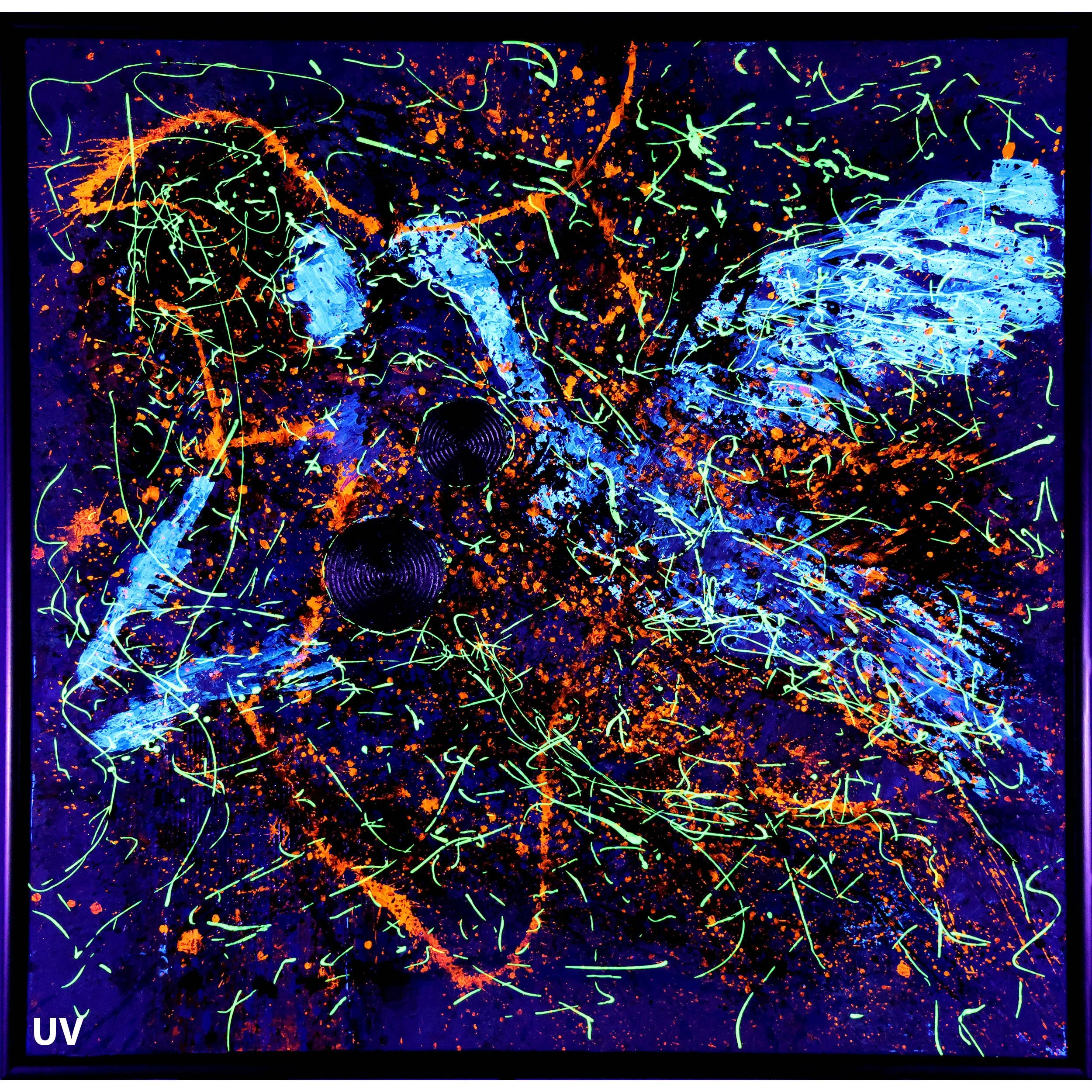
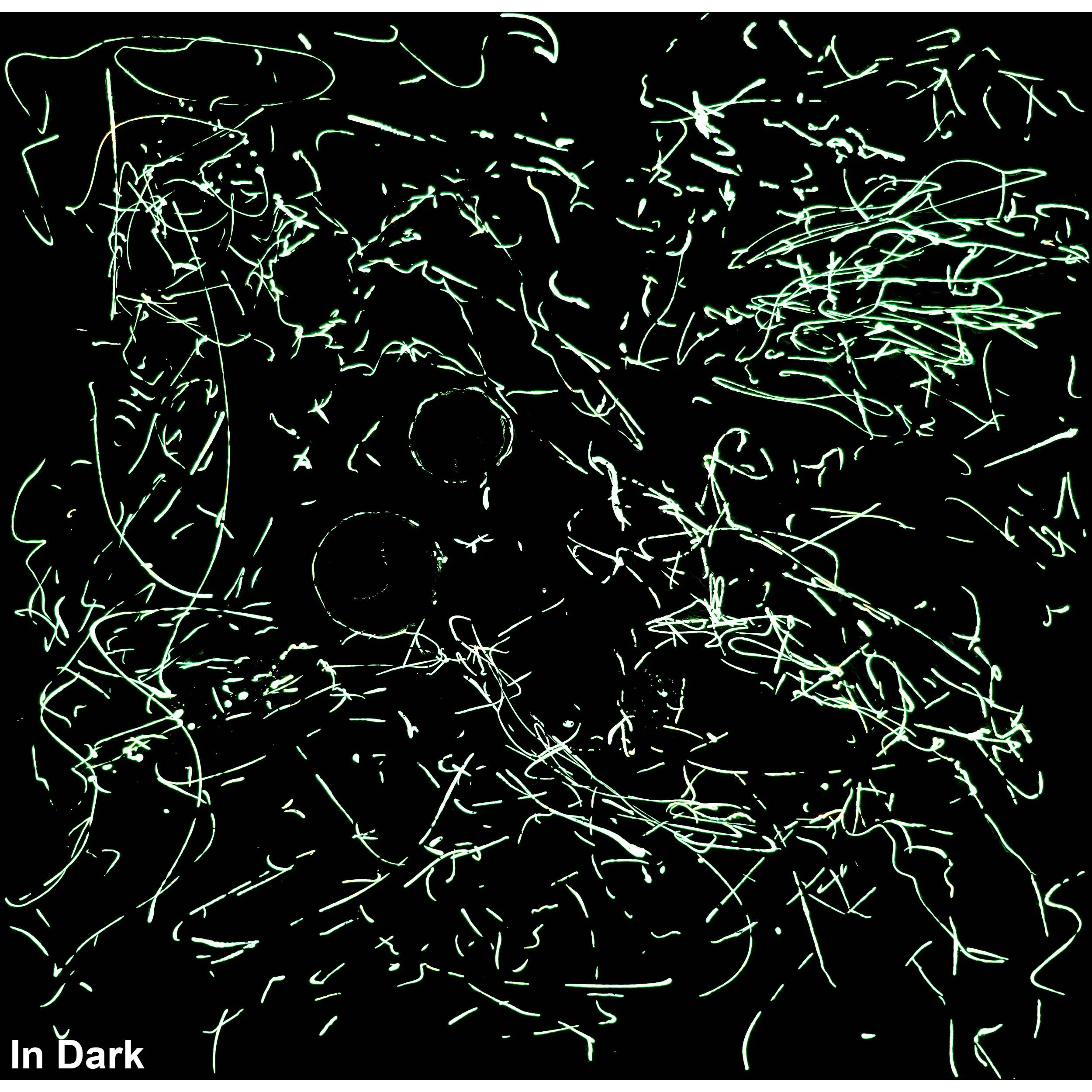
Under UV light, a second nature emerges: fluorescent traces form a subtle, hidden network, suggesting that beneath the visible surface lies a more instinctual layer of experience. In darkness, the work does not disappear but lingers in a faint glow—like a memory that resists fading.
This shifting presence reflects the essence of the Leda myth: its ambiguity. It is not only a story of seduction, but of tension between intimacy and otherness, beauty and unease, surrender and the loss of control. Janus does not illustrate the myth—he allows it to be felt as a complex, layered experience.